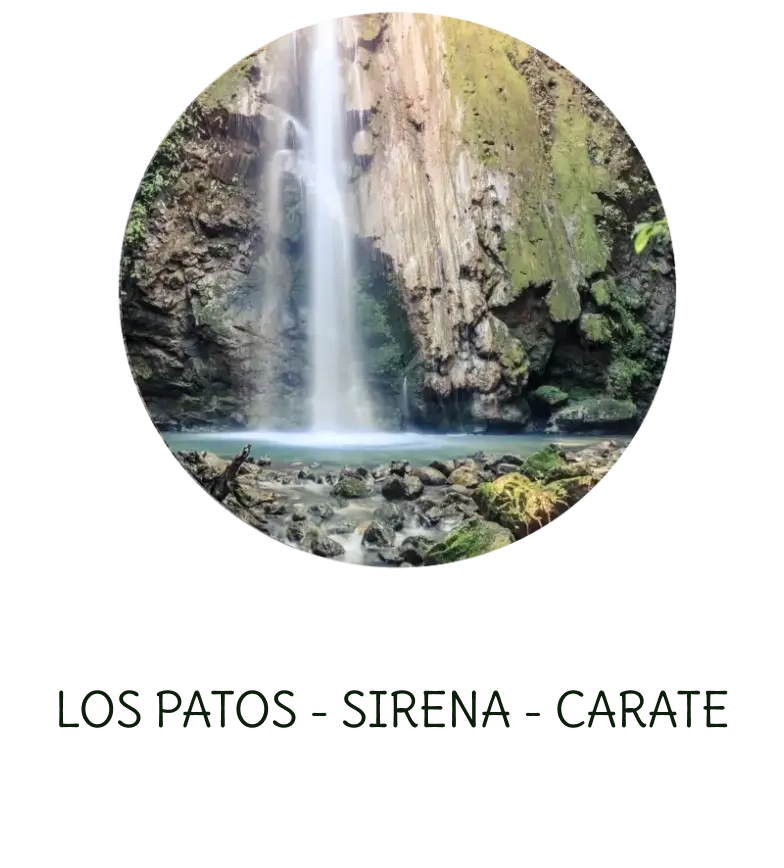
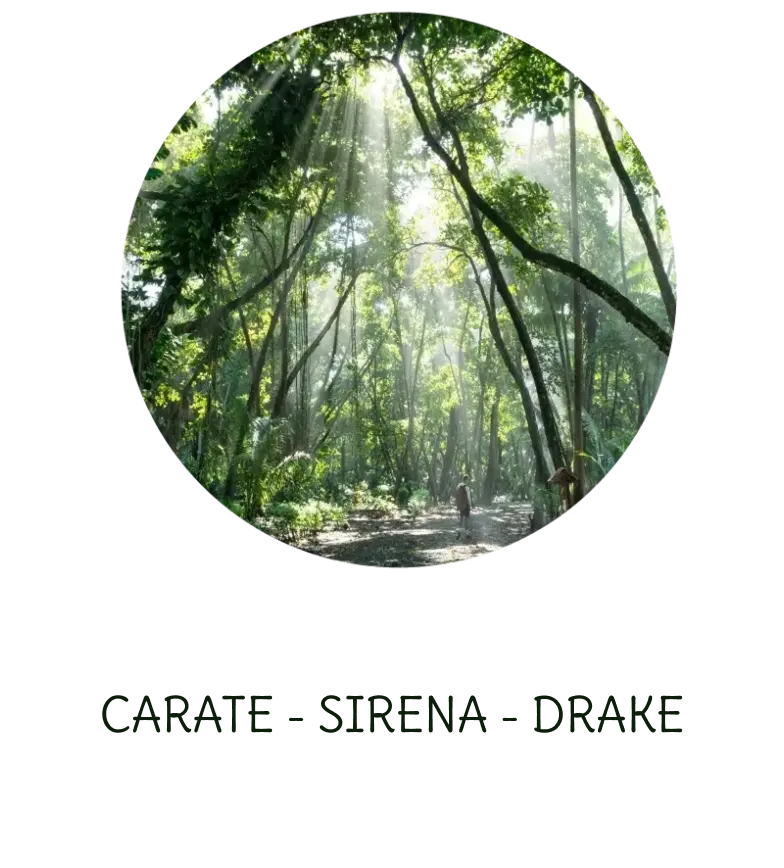
Visiting Sirena station in Corcovado through Los Patos station and leaving through La Leona station.
Duration of the tour:
8+8+8 hours
Difficulty level:
High
Distance traveled:
14+6+12.4 miles (23+10+20 kms)

This tour is designed to visit the Corcovado National Park, from Puerto Jimenez, arriving at the Sirena Sector on foot from the Los Patos sector, spending two nights in the park facilities and leaving on foot through Carate where a vehicle will be waiting for us to return to Puerto Jimenez.
A vehicle will take us to the Los Patos station from where we will begin a journey of about 10 hours with several stops in which we will cross primary and secondary forests, we can find fallen trees and we will have to cross rivers, in a landscape that is worth it.
The second day will begin before dawn to see the jungle animals awaken and we will leisurely explore the trails of the National Park. At the end of the day we will have dinner and we will be able to listen to the sounds of the night in a tropical jungle before going to sleep.
Early on the third day we will begin a journey of about 20 km that will take us to Carate, passing through the Leona station. This path will go into the jungle, at times it will come out to the beach, and we will have to cross rivers along the riverbed, it is quite an adventure.
This tour is designed for those travelers who want to explore as many environments as possible and are willing to experience great amounts of adventure.
What does the tour in Corcovado National Park include?
Include:
Park entrance fees.
Transportation to Los Patos and transportation from Carate to Puerto Jimenez.
Accommodation for two nights at the station facilities
Dinner on the first day, breakfast, lunch and dinner on the second day, and breakfast on the third day.
Accredited guide for group.
Not include:
Water and reusable bottle
Other foods (you must bring food for certain tours).
What to bring:
- A reusable bottle with water.
- Sunscreen.
- Cap
- Insect repellent.
- Swimsuit
- A waterproof bag (recommended).
- Headlamp (recommended)
- Binoculars (recommended).
* Avoid wearing bright colors to better observe the fauna.
**Since 2021, the entry of single-use plastic is prohibited in National Parks and Biological Reserves in Costa Rica.